
Why Timing Matters More Than Parents Think
Plenty of families wait until a child is “old enough” to volunteer with animals, picturing teenagers mucking out stalls or walking shelter dogs. But readiness for animal-related volunteer work has less to do with age and more to do with a handful of specific skills. A five-year-old who can follow a simple rule and stay calm around a nervous animal is often more ready than a twelve-year-old who has never been asked to slow down and pay attention to something other than themselves.
The real question is not “how old is my child,” but “can my child do these five things yet.”
The Five Readiness Markers to Look For
Can they follow a safety instruction without needing it repeated three times? Animals respond to consistency. A child who needs constant reminders not to run, shout, or grab is not being defiant, they are just not there yet. That is fine. It is worth checking again in six months.
Can they sit still for two or three minutes? Most animal volunteer tasks, from feeding a rescued goat to sitting quietly near a recovering rabbit, require stillness before they require action. Practice this at home first. A child who can watch a sibling’s soccer game without wandering off has probably built this muscle already.
Do they understand the difference between “my idea” and “the animal’s need”? This is the big one, and it is more of an emotional skill than a physical one. A child who wants to pet every dog they see, regardless of whether the dog wants to be petted, is not yet reading the animal’s signals. A child who asks “does she want me to come closer?” is.
Can they tolerate a task not going the way they expected? Animals do not perform on cue. A volunteer shift might mean the horse does not want a brush that day, or the shelter cat hides the entire time. Kids who can shrug that off and try again tomorrow get more out of these experiences than kids who need a guaranteed payoff.
Can they handle a sad outcome? Animal rescue work sometimes involves illness, old age, or an animal that does not make it. Families do not need to expose young children to the hardest parts right away, but a child who cannot tolerate any disappointment probably is not ready for a setting where disappointment is part of the deal.
Starting Small Before Starting Official
Formal volunteer programs at shelters and sanctuaries often set a minimum age, commonly ten or twelve, partly for liability reasons and partly because of the physical demands involved. That does not mean younger kids are shut out of the underlying experience. Families can build the same skills gradually:
- Caring for a low-maintenance pet at home with real, unsupervised chores, not chores that get quietly redone by an adult later.
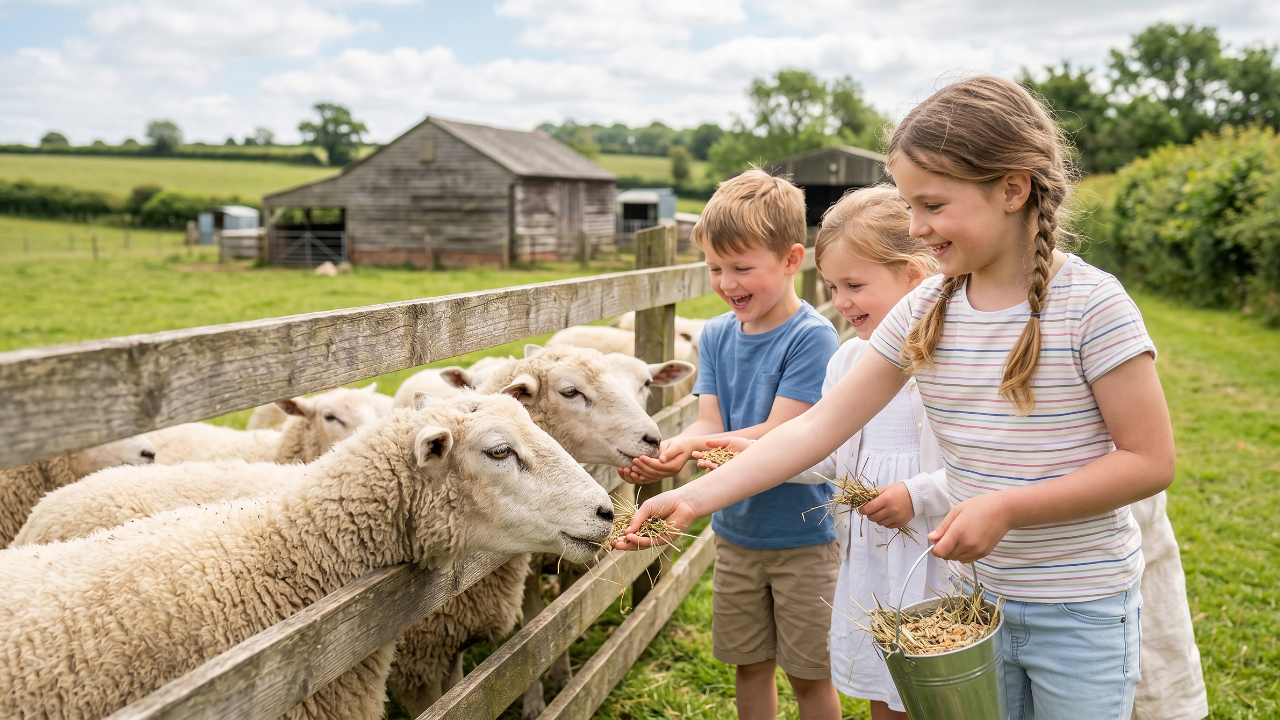
- Visiting a working farm or educational sanctuary where hands-on contact is supervised and age-appropriate.
- Reading about animal rescue stories and talking through what the animal might have needed at each stage.
- Practicing “asking permission” with a family pet before petting, picking up, or approaching, so it becomes a habit rather than a rule.
Educators who build animal contact into daily learning see this pattern often. Michele Fasnacht, founder of Solid Rock Community School, has spoken about how students develop stewardship skills gradually through repeated, low-stakes contact with animals rather than through a single big event. The pattern holds outside a school setting too: consistency beats intensity.
What to Avoid
Do not sign a child up for a high-intensity volunteer role as a way to teach responsibility. It tends to work the other way around. Responsibility gets built in small doses first, then applied to bigger settings. A child who has never been asked to feed a fish on schedule is unlikely to suddenly rise to the occasion at an animal shelter.
Avoid framing volunteering as a reward for good behavior, too. That turns the animal into a prize rather than a being with its own needs, which undercuts the entire point of the experience.
Finally, resist the urge to hover and narrate. Kids build genuine confidence around animals by making small judgment calls themselves, like noticing a dog’s body language or figuring out how much water a rabbit needs. Stepping back, even slightly, lets that instinct develop instead of getting overridden by an adult’s stream of directions.
A Reasonable Rule of Thumb
If a child can follow one clear safety rule, sit still for a few minutes, and ask before acting, they are ready for supervised animal contact, whatever their age. Formal, unsupervised volunteer roles can wait until a program’s minimum age and the physical demands of the work line up with what the child can actually handle. Most families find the two timelines meet somewhere around late elementary school, though every kid gets there on their own schedule.
