
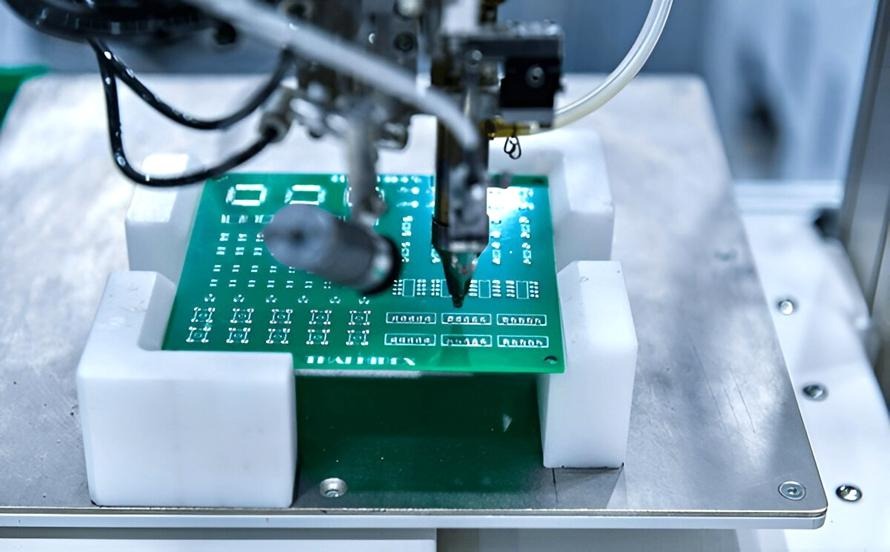
Modern electronic devices depend on intelligent control systems to perform accurate, efficient, and reliable operations. Whether in industrial automation, consumer electronics, medical equipment, automotive systems, or home appliances, control circuit boards serve as the central platform that manages communication between electronic components. As products become more sophisticated, the need for high-quality Control PCB solutions continues to grow across numerous industries.
A Control PCB is designed to process signals, monitor inputs, execute programmed instructions, and control the operation of connected devices. It acts as the brain of an electronic system by coordinating sensors, processors, power circuits, communication modules, and output devices. Because these circuit boards are responsible for critical system functions, their design and manufacturing require exceptional precision and reliability.
Producing a dependable control PCB involves much more than fabricating copper traces. It requires careful PCB layout design, high-quality materials, precise manufacturing processes, and comprehensive quality assurance. Partnering with an experienced Control PCB manufacturer ensures that every board delivers stable performance, long service life, and consistent reliability under demanding operating conditions.
This article explains what a Control PCB is, how it is manufactured, its advantages, common applications, and why selecting the right manufacturing partner is crucial.
What Is a Control PCB?
A Control PCB is a printed circuit board designed to manage and control the operation of electronic equipment. It serves as the central platform where processors, microcontrollers, memory devices, sensors, communication interfaces, and power management circuits work together to execute specific functions.
Unlike simple circuit boards that only provide electrical connections, control PCBs are responsible for processing information and making operational decisions based on programmed instructions. They receive input signals from sensors or user interfaces, process the data through embedded controllers, and generate output signals that control motors, displays, relays, valves, or other electronic devices.
Depending on the application, control PCBs may be designed as single-sided, double-sided, or multilayer boards. More advanced systems often require multilayer PCBs to support higher component density, faster communication, and improved signal integrity.
Because they play a critical role in system performance, control PCBs must be designed for accuracy, durability, and long-term reliability.
Why Control PCBs Are Important
Virtually every intelligent electronic product relies on a control PCB to perform its intended function. Without a properly designed control board, communication between electronic components becomes unreliable, reducing system efficiency and increasing the risk of operational failure.
A well-designed control PCB ensures accurate signal processing, stable power distribution, and efficient communication between various electronic modules. Proper circuit layout minimizes electrical noise, reduces signal interference, and improves overall system performance.
Thermal management is also an important consideration because processors and power components generate heat during continuous operation. An optimized PCB layout helps distribute heat effectively, protecting sensitive components and extending product lifespan.
As electronic devices become more automated and interconnected, the importance of reliable control PCBs continues to increase across virtually every technology sector.
The Control PCB Manufacturing Process
Manufacturing a Control PCB begins with reviewing the customer’s design files through a comprehensive Design for Manufacturability (DFM) analysis. Engineers verify trace widths, component spacing, drill sizes, layer stack-up, thermal requirements, and production tolerances before fabrication begins.
The manufacturing process starts by transferring circuit patterns onto copper-clad laminate using precision photolithography. Chemical etching removes unwanted copper while preserving the required electrical circuitry.
For multilayer control PCBs, individual circuit layers are carefully aligned and laminated together under controlled temperature and pressure to form a single board structure. Precision drilling creates holes for components and vias, followed by copper plating that establishes reliable electrical connections between layers.
After drilling and plating, solder mask protects exposed copper traces while silkscreen printing provides component identification and assembly markings. Surface finishing improves solderability and protects exposed copper against oxidation.
Every completed PCB undergoes automated optical inspection, electrical testing, and dimensional verification to ensure it meets customer specifications before assembly or shipment.
Advantages of Control PCB Technology
One of the greatest advantages of a Control PCB is its ability to integrate multiple electronic functions into a compact and reliable platform. Modern control boards support processors, communication interfaces, memory devices, sensors, and power management circuits within a single PCB design.
Accurate circuit routing improves signal integrity by reducing electrical interference and ensuring stable communication between components. Proper power distribution further enhances system reliability by maintaining consistent operating voltages throughout the circuit.
Control PCBs also contribute to product miniaturization. Efficient PCB layouts allow manufacturers to develop smaller and lighter electronic devices without sacrificing functionality.
Another significant benefit is long-term reliability. High-quality materials, precision manufacturing, and comprehensive testing enable control PCBs to operate continuously in demanding industrial, automotive, and commercial environments.
These advantages make control PCBs an essential component in modern electronic system design.
Applications of Control PCBs
Control PCBs are used in countless electronic products across a wide range of industries. Industrial automation systems rely on these boards to manage programmable logic controllers, robotic equipment, conveyor systems, manufacturing machinery, and process control equipment.
Automotive manufacturers integrate control PCBs into engine control units, transmission controllers, battery management systems, infotainment systems, advanced driver assistance systems, and electric vehicle electronics.
Medical devices depend on reliable control boards in diagnostic instruments, patient monitoring systems, laboratory equipment, imaging devices, and portable healthcare products where operational accuracy is critical.
Consumer electronics manufacturers use control PCBs in televisions, washing machines, refrigerators, air conditioners, smart home devices, gaming systems, and kitchen appliances to coordinate electronic functions efficiently.
Telecommunications equipment, renewable energy systems, security devices, smart meters, lighting controllers, aerospace electronics, and Internet of Things (IoT) devices also rely heavily on advanced control PCB technology.
Why Choosing an Experienced Control PCB Manufacturer Matters
Although Control PCBs are widely used, producing reliable boards requires advanced engineering knowledge and precision manufacturing capabilities. An experienced Control PCB manufacturer understands how PCB design, material selection, manufacturing tolerances, and assembly processes influence overall product performance.
Professional manufacturers provide engineering support during product development by reviewing PCB layouts, thermal performance, signal routing, component placement, and manufacturing requirements before production begins.
Advanced manufacturing facilities equipped with laser direct imaging, automated optical inspection, CNC drilling, X-ray inspection, electrical testing systems, and intelligent production management ensure consistent quality throughout the manufacturing process.
Experienced manufacturers also maintain strict process control, helping customers reduce production defects, improve manufacturing yields, and achieve reliable long-term product performance.
Working with a knowledgeable manufacturing partner significantly reduces production risks while improving overall product quality.
Quality Assurance in Control PCB Manufacturing
Quality assurance is critical because control PCBs often perform essential functions within electronic systems. Manufacturers inspect incoming materials before carefully monitoring every production stage to ensure dimensional accuracy and process consistency.
Automated Optical Inspection detects open circuits, short circuits, missing copper features, and other fabrication defects before assembly. X-ray inspection evaluates hidden solder joints and multilayer interconnections where applicable.
Electrical testing verifies circuit continuity, insulation resistance, and functional electrical performance before shipment. Additional reliability evaluations may include thermal cycling, solderability testing, environmental testing, vibration testing, and dimensional inspection to ensure long-term durability.
Leading manufacturers maintain internationally recognized certifications such as ISO 9001, IPC standards, UL certification, IATF 16949 for automotive electronics, ISO 13485 for medical devices, and RoHS compliance. These certifications demonstrate adherence to globally recognized quality management and manufacturing standards.
Conclusion
The Control PCB is a fundamental component in modern electronic systems, providing the intelligence needed to monitor, process, and control complex operations across a wide variety of industries. Its ability to support reliable signal processing, efficient power distribution, and compact electronic designs makes it indispensable for industrial automation, automotive electronics, medical devices, telecommunications, consumer products, and many other applications.
Choosing an experienced Control PCB manufacturer ensures access to advanced engineering expertise, precision manufacturing technologies, and rigorous quality control processes. As electronic products continue to become smarter, more connected, and more sophisticated, high-quality control PCBs will remain a vital foundation for building reliable and efficient electronic systems.
