
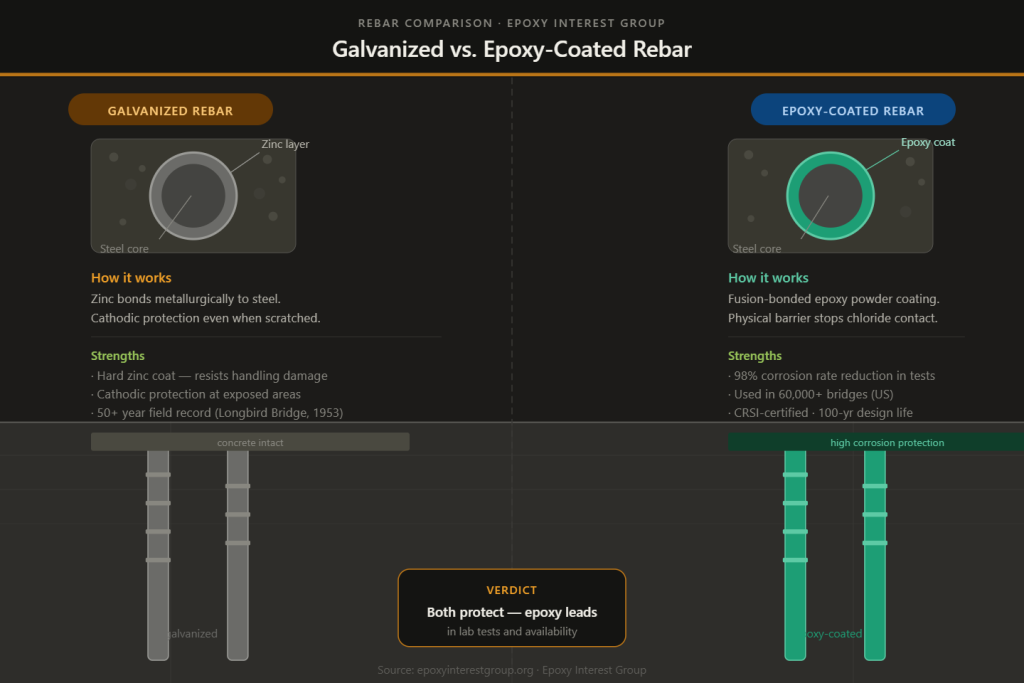
The right reinforcement could very well dictate how long a concrete structure last. In the case of new or repaired projects that are subject to moisture, chemicals, or extreme environmental conditions, builders, engineers and property owners frequently have discussions about galvanized rebar vs epoxy rebar. Each one of the two alternatives provide corrosion protection but they react differently to certain events.
It is helpful for you to know these differences so that you can choose the right material for your project.
Why Corrosion Protection Matters?
Steel is what provides concrete with its strength, but when exposed to both water and chlorides, the steel can easily end up rusting away. Steel expands and builds pressure in the concrete as it corrodes. This leads to cracking, spalling, and expensive structural repairs.
Covers of concrete structures as well as the use of corrosion-resistant reinforcement should be implemented to increase its lifetime.
What is Galvanized Rebar?
In the case of galvanized rebar, it is coated with a layer of zinc. This coating is sacrificial in nature, which means it slows down the rusting of the steel even if its surface gets mildly scratched.
Some key advantages include:
- Excellent corrosion resistance
- Durable protective coating
- Coating damage − coated surfaces do better
- High service life under difficult environments
Such properties of galvanized rebar, make it a good choice for highway bridges and parking structures or all forms of marine works.
What is Epoxy Rebar?
Epoxy-coated rebar has an epoxy layer that creates a barrier between moisture and the steel. It is largely used in highway construction and road works.
Benefits include:
- Smooth protective coating
- Good resistance to moisture
- A lower initial cost of the material in several respective cases
Conversely, if the coating is chipped or damaged during handling, corrosion can start on the sub-surface.
Comparing the Two Options
Consider more than just the price of rebar when looking at galvanized rebar vs epoxy rebar.
Consider the following:
- Expected service life
- Moisture or salt exposure
- Maintenance needs
- Conditions for installation
- Costs for long-term repair
The selection is a matter of context and depends on project user requirements on durability.
Making a Smart Investment
While both products enhance corrosion resistance, hot dip galvanized rebar vs epoxy rebar is a key consideration for some long-life applications. Structural elements that are regularly susceptible to coastal conditions, heavy traffic, or deicing salts may need fortifying corrosion safety system.
Final Thoughts
The correct reinforcement will reduce maintenance costs and increase the life of concrete structures. By learning about sites where such applications are possible, engineers/contractors can make a choice based not just on initial capital cost but also the long-term value of its resistance to corrosion in concrete environments along with development needs.
