
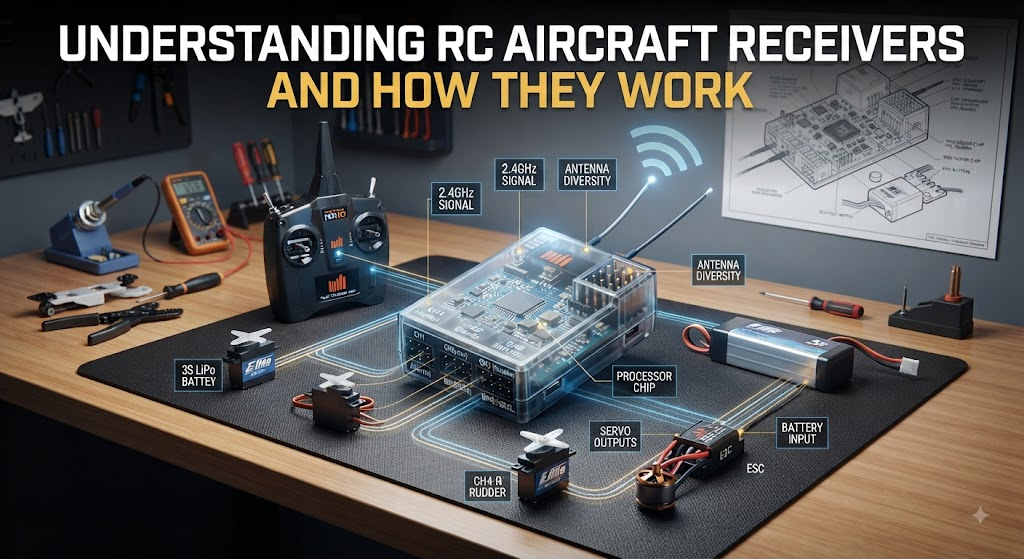
RC aircraft, known for their agility and versatility, rely heavily on the seamless functionality of RC aircraft receivers. An RC Aircraft Receivers unit is an essential component that determines the efficiency of flight by receiving signals from the transmitter and converting them into actionable commands.
The Role of Receivers in RC Aircraft
RC aircraft receivers function as the intermediary between the transmitter and the servos on the aircraft. Without them, the transmitted signals would not reach the aircraft, rendering it inoperative. Their primary role involves interpreting signals sent by the RC aircraft transmitters, which dictates the aircraft’s movements and operations.
Components of an RC Aircraft Receiver
An RC aircraft receiver consists of several critical components. The antenna is responsible for capturing signals, while the decoder translates these signals into instructions. The output channels further distribute these instructions to the servos, ensuring that the various parts of the aircraft respond accordingly.
Types of RC Aircraft Receivers
There are generally two types of receivers used in RC aircraft: AM receivers and FM receivers. AM receivers are typically less expensive and suited for beginners, while FM receivers offer more reliable signal transmission, crucial for advanced operations.
Modern Technological Advancements
With advancements in technology, modern receivers can offer features such as frequency hopping and spread spectrum technology, improving signal reliability and reducing interference risks.
Choosing the Right Receiver
The selection of an appropriate receiver is crucial for the optimal performance of an RC aircraft. Factors such as the type of aircraft, the environment in which it will be operated, and specific requirements of the user guide the choice of the receiver.
Channel Considerations
Receivers also differ based on the number of channels they support. While basic models operate with four channels, more sophisticated models could offer up to ten or more, providing greater control and functionality.
Installation and Configuration
Proper installation and configuration of the receiver are vital for ensuring optimal performance. This includes ensuring the receiver is securely mounted, the antenna is correctly aligned, and all connections are secure.
Testing the Receiver
After installation, testing the receiver is a crucial step. This involves confirming that signals are being accurately transmitted and received, and that the aircraft responds reliably to commands.
Maintenance and Troubleshooting
Regular maintenance of the receiver prevents potential issues and prolongs its lifespan. Troubleshooting may involve checking connections, realigning the antenna, or recalibrating the controls as needed.
Receiver Safety Measures
Ensuring the safety of the receiver includes keeping it away from moisture, checking the power supply, and ensuring compatibility with other components to prevent malfunctions.
The Significance of Frequency Range
The frequency range determines the possible distance over which the transmitter can control the aircraft. A substantial range is particularly important for advanced models that need to cover more ground.
Buying from a Trusted Source
Purchasing receivers from reliable sources like the RCMA hobby shop ensures quality and access to expert advice. Trusted suppliers not only offer a variety of options but also provide support and warranties on their products.
Conclusion
Understanding the intricacies of RC aircraft receivers enhances the flying experience by ensuring precision and reliability. Whether for leisure or competition, selecting the right receiver and maintaining it properly guarantees safe and enjoyable flights.
