
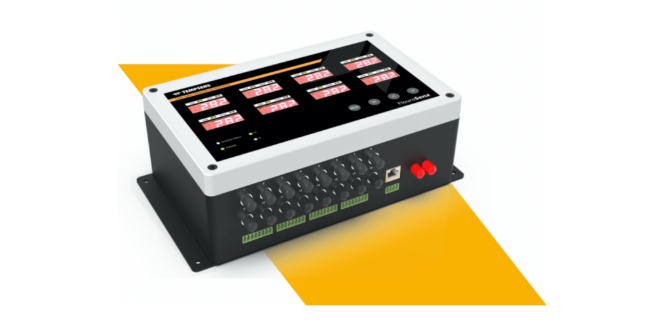
Owing to the benefits associated with fiber-based sensing, industries are gradually moving towards the solution offered by a fiber optic sensor manufacturer that holds better accuracy, high reliability, and safe monitoring in some environments where conventional sensors fail to perform.
However, the increasing complexity of industrial systems and the simultaneous demand for real-time, high-precision monitoring put a strain on the monitoring systems. Sensor failures in power plants, oil and gas facilities, chemical units, and infrastructure projects operate under extreme conditions, where a sensor is out of order, leading to safety issues or downtime and high costs. They are frequently impacted by interference, heat, and environmental stress, features of traditional electrical and electronic sensors. Many industrial applications have reached the limit of sensor performance, and fiber optic sensing is a solution that can provide reliable measurements for the future.
Why Industries are Opting for Fiber Optic Manufacturers for Critical Monitoring
There is a rising adoption of fiber optic sensing solutions for critical monitoring applications that require high metering accuracy, safety, and reliability, especially across the marine and energy distribution industries.
1. Improves Data Reliability Immunity to Electromagnetic Interference
Fiber-optic sensors are immune to interference and an ideal choice for electrically noisy environments where data reliability is paramount.
- Remain completely unaffected by electromagnetic and RF interference.
- Reliability with respect to motors and drives, generators, transformers, and switchyards.
- Long cable length with good transfer of signal.
- Not susceptible to electrical noise or ground faults.
- Increased confidence in data for control and safety systems.
This feature is one of the important reasons for industries to choose a fiber optic sensor manufacturer when monitoring applications meet unavoidable electrical interference.
2. Enhanced Safety in Hazardous and Explosive Environments
With fiber optic sensing, the electrical signal at the sensing point is removed, making it safer.
- No risk of sparks or ignition.
- Exempt in explosive and flammable situations.
- Applied for oil and gas, petrochemical, and chemical plants.
- Less reliance on elaborate intrinsic safety barriers.
- Compliance with stringent industrial safety regulations is becoming easier.
Since they remove electrical energy from dangerous areas, they provide a very low operational risk and make the manufacturer of fiber optic sensors a partner of choice for safety-critical industrial sectors.
3. High Precision and Extended Stability of Measurement
Fiber optic sensors provide long-term measurements with very high accuracy.
- Compared to electrical sensors, no signal drift.
- High sensitivity for temperature, strain, pressure, and vibration.
- Long-term trend analysis based on reliable data.
- Reduced recalibration frequency.
- Improved process stability and efficiency.
A fiber-optic sensor manufacturer for industries dependent on precision control is the sensor of choice because it lasts year after year, with every measurement stably held for years of continuous operation.
4. Long-Distance and Distributed Sensing Capabilities
Moreover, sensing with fiber optics allows continuous monitoring of large assets and assets spread over a large geographical area.
- Single optical fiber-based monitoring over multiple kilometers.
- Probability of distributed sensing over a pipe, tunnel, and structure.
- Less need for many separate sensors.
- Real-time detection of localised events.
- Great for large industrial and power generation projects.
Such functionality enables a fiber optic sensor supplier to cater to applications that would otherwise be unfeasible via traditional sensors because they exceed range or complexity limits.
5. Resistance to Harsh Environmental Conditions
Fiber optic sensors are created for reliability under vigorous environmental stress.
- Stress–temperature resistant and thermal cycling resistant.
- Resistant to rust, humidity, and chemical exposure
- Great for submerged, buried, and remote mounting.
- Long lifespan even in extreme conditions.
- Lower maintenance and replacement requirements.
This longevity is why industries are turning to a fiber optic sensor manufacturer to monitor places where traditional sensors fail after a short time.
6. Scalable and Future-Ready Monitoring Solutions
With the increasing demand for monitoring, fiber optic sensor manufacturers are favoured by most industries because of the scalability of their solutions.
- Expansion of the platform without a full-blown redesign.
- Seamlessly integrated with digital monitoring instruments.
- Enables Infrastructure and Industrial solutions.
- Can adjust, control, and even keep monitoring when demand evolves.
- Long-term, future-proof investment.
Partnering with a fiber optic sensor manufacturer enables industries to create monitoring systems that grow and evolve as operations expand.
Conclusion
As a result, industries are gradually moving toward fiber optic sensor manufacturers as fiber-based sensing offers superior, unsurpassed reliability, security, and accuracy for critical sectors. Monitoring without interference and providing scalability will become indispensable as industrial systems gain complexity and risk sensitivity. Engaging with expert manufacturers like Tempsens, who are well known for advanced fiber optic sensing principles, can help you build resilient solutions that will always be a better option, as they are designed for mission-critical operations over the long term.
