
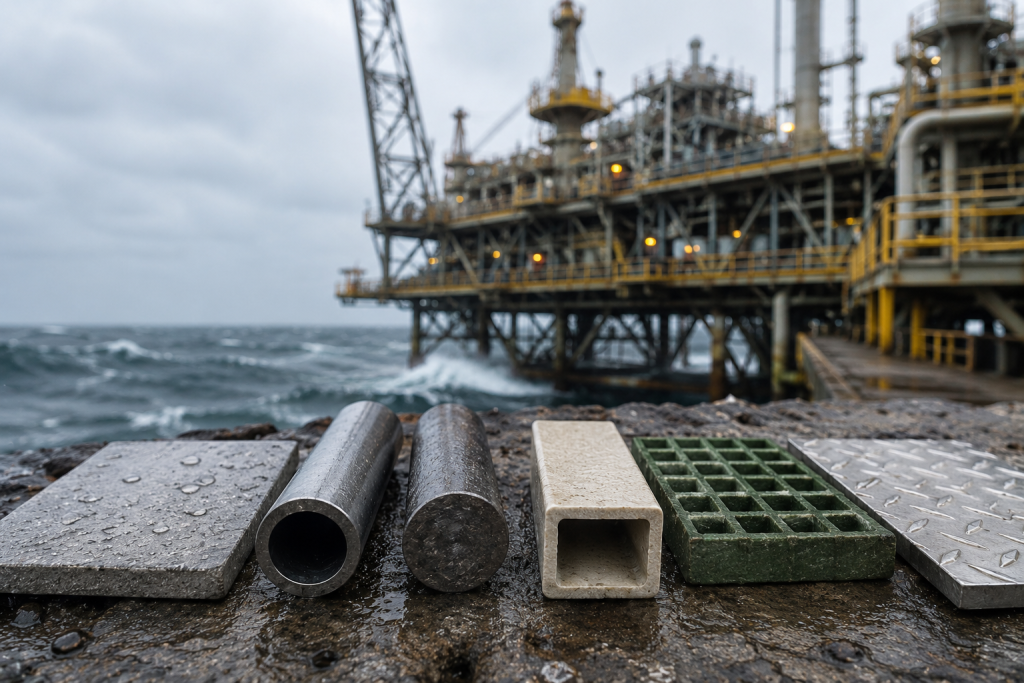
Not all building materials are created equal. While choosing appropriate materials in normal circumstances already presents certain challenges, Australian property owners and builders find themselves in situations where choosing correctly can save them hundreds or thousands of dollars, and perhaps years of agony. Here is what you should know about the types of materials designed to withstand extreme conditions.
High-Performance Polymers
PEEK (polyether ether ketone) and PTFE (polytetrafluoroethylene) are examples of such materials. These high-performance polymers offer exceptional stability against thermal and mechanical stress, resistance to degradation by various factors, including sunlight, moisture, and chemical contact. Thus, polymers are excellent choices for plumbing fittings, insulation materials, weatherproofing membranes, etc.
For property owners based in coastal regions, the choice of polymers is especially beneficial due to their durability against salt and other elements typical for coastal climates. Polymer-based products are usually lighter than the corresponding metal constructions, making the installation process significantly easier and cheaper.
Advanced Ceramics
In cases where heat resistance is the key requirement, the choice should be made among advanced ceramics. These materials maintain their integrity while exposed to temperatures well over 1,500°C. Advanced ceramics are ideal for the following applications:
- Kilns
- Exhaust systems
- Industrial furnaces
These materials are also highly resistant to corrosion and oxidation; hence, they can be used in harsh conditions when acid exposure is frequent. However, advanced ceramics are highly susceptible to mechanical shocks; hence, it is better to avoid using them in such scenarios.
Superalloys
Nickel, cobalt, and iron-based metal alloys, known as superalloys, are used in applications where mechanical stress occurs in the presence of extremely high temperatures. Such materials were originally designed for aircraft engines, namely gas turbine engines, which means they offer exceptional mechanical strength and creep resistance.
Superalloys became highly relevant not only for aerospace engineering but also for oil and gas infrastructure, marine engineering, and energy generation plants. Thus, the specification of superalloys should become a priority in designing systems that require such material characteristics.
Composites
As the name suggests, composites are the mixture of two or more materials, each contributing unique characteristics to the end result. CFRPs (carbon fibre reinforced polymers) are one of the most popular modern composites offering unparalleled strength-to-weight ratio.
In terms of applicability for Australian projects, high-quality marine plywood can be a great option. In essence, marine plywood is a composite product combining various wood veneers glued with water-resistant adhesive. As such, marine plywood is resistant to humidity, delamination, fungal growth, and various physical and mechanical stresses. It can be used as the basis for outdoor decks, floor panels in wet rooms, boats, etc.
However, composites continue to develop rapidly. Hybrid composites, including those with polymers, metals, and ceramics, have appeared recently and promise unique material properties.
The Future of Extreme Environment Materials
Materials engineering evolves rather rapidly. Today, scientists work on creating self-repairing polymers, ceramics mimicking the properties of living tissues, and recyclable composites for reducing waste during construction works.
Thus, for property owners in Australia, knowing about the development of such materials can prove helpful in the future as well. After all, the materials specified at the beginning of the construction can make the difference for your buildings and structures’ operation over the coming decades.
